
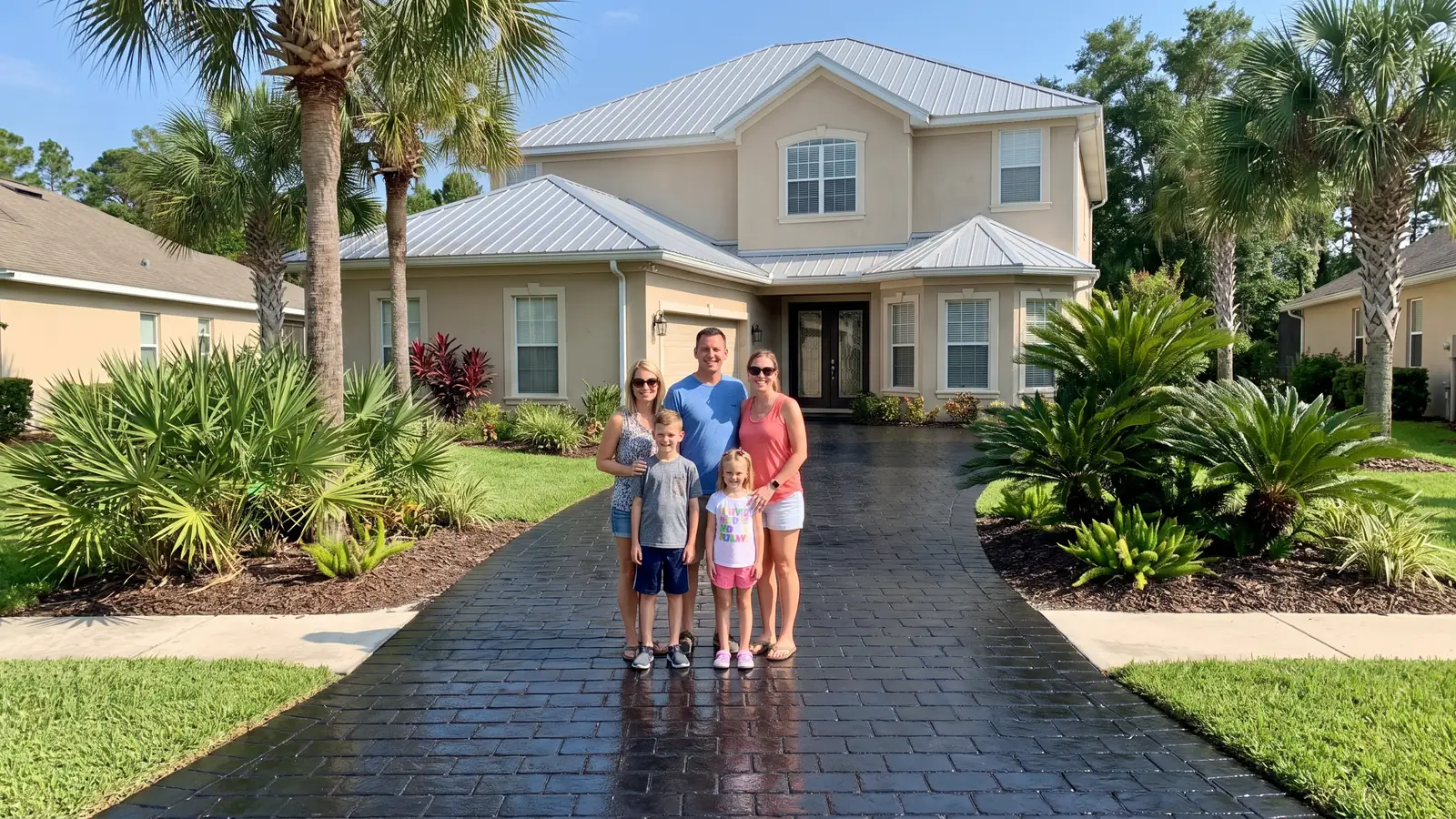
Paver sealing for San Marco homes
Paver Sealing in San Marco, FL
Near San Marco Square, where Atlantic Boulevard meets Hendricks Avenue, call (904) 872-8339 for a free paver sealing estimate.
- Brings out deeper paver color
- Fresh joint sand helps lock pavers in place
- Gives weeds less room to grow
- Makes the surface easier to keep clean
- Free estimate, no obligation
Request a Free Estimate
Free, no obligation.
Fast, careful paver sealing in San Marco
Paver sealing in San Marco starts with a free estimate from a local contractor. The contractor cleans, re-sands and seals driveways, courtyards, walkways and pool decks, on concrete pavers and old clay brick alike. A reply to anyone who chooses to ask for a free estimate arrives within 1 business day, usually much sooner. The estimate is free, and you decide what happens next.
Picture the front walk under a canopy of oaks. Green film has crept along the shaded joints, and the brick color has gone dull. After a gentle wash, fresh sand and a sealer that suits the material, the walk looks cared for again. For a quick chat, call (904) 872-8339.
Why hire a local paver sealing contractor in San Marco?
San Marco pavers sit beside homes from the 1920s and later, under old oaks and near a tidal river, so care has to be gentle and well timed. A local contractor plans around that, so ask for a free estimate and get an honest look.
Free, honest look
The contractor checks brick and concrete pavers at no charge and tells you if a repair should come before any sealer.
A price to measure by
Published prices in this region commonly run $1.75 to $3.25 per square foot. Brick and stone need different sealer, so ask for that line.
Gloss, satin or matte
Old brick often looks best with a natural finish. A wet look adds shine but shows scuffs sooner on a busy driveway.
No pressure
The estimate carries no obligation, and a reply comes within 1 business day, usually much sooner.
Get Your Free Estimate in San Marco
Tell us about your pavers in San Marco.
Free, no obligation
What paver problems show up most in San Marco?
Old brick that cannot trap moisture
Old clay brick wants a breathable, penetrating sealer rather than a thick film, says a Northeast Florida paver company, since a film can hold moisture in and bring flaking and white haze. A brick maker's guide adds that sealant should never go over damp or dirty surfaces, since those conditions get locked in. On a San Marco lot with clay brick, the product choice matters more than the brand. The contractor names it before work begins. A small test spot in a corner shows how the brick takes the product before the whole walk is coated. That check costs little and avoids a blotchy finish on a front walk everyone sees.
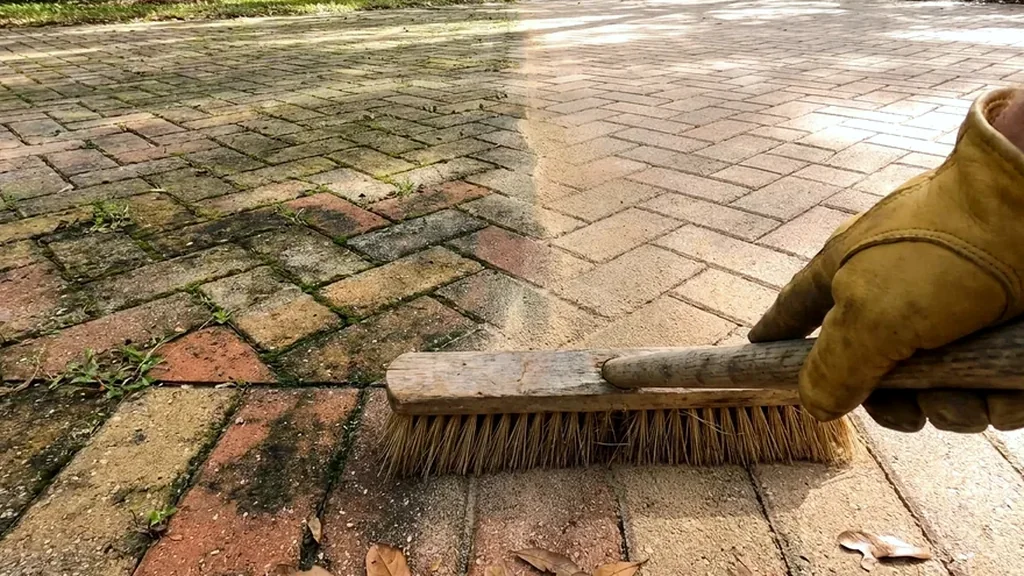
Shade, oaks and green film
San Marco has fourteen parks. A Metro Jacksonville list describes Belmonte Park as surrounded by scenic oaks and Landon Park as shaded by large magnolias and oaks. A landscape trade guide says moss, lichens and algae should not grow on pavers unless the area is heavily shaded. Under big trees, green film is the usual sign. Fallen leaves and pollen add to the film on a shaded walk. Cleaning comes first, then drying, then the coat. Shaded joints may need a second look a few weeks later, since new growth starts where moisture lingers.
Humidity near the St. Johns
Tides affect the St. Johns River far upstream and have an especially strong influence near Jacksonville, says the water management district. San Marco sits on the river's south bank, across from downtown. Pavers close to the water may dry slowly after rain. Sealer needs a dry surface and about 24 hours of dry weather to cure, so the contractor waits for a clear run. That patience is the difference between a clear coat and a cloudy one. A day of waiting is cheaper than stripping a hazy coat.
Roots under walks and drives
A Jacksonville paver company says a section lifted by tree roots or a dip where you park is repaired before sealing. San Marco's older shade trees make roots under walks a common thing to check. Sealing a lifted paver only preserves the problem. The contractor marks each rocking spot and prices the repair as its own line. You can approve the repair and the sealing separately. A lifted walk may be worth fixing even if you hold off on sealing.
A coat nobody remembers
Alexandria Place, a subdivision in the San Marco area, has a median home year of 1939 on the county roll. Homes that old have had many owners and many fixes. One Jacksonville company says pavers sealed before with an oil-based product must be stripped first. Water-based sealer cannot go over solvent-based sealer either, so the contractor tests what is there. Both coats must match, or the new sealer can peel. A quick test tells whether a new coat will bond or needs stripping first. Stripping adds cost, so it is better to learn that at the estimate.
What kinds of homes and pavers will a contractor see in San Marco?
Expect a mix of historic homes and later infill on shaded streets. San Marco is an 80-acre Mediterranean-inspired community that shows City Beautiful planning, with winding streets, planted medians, parks and larger lots. Ground broke in 1925 on the former Villa Alexandria estate. ask for a free estimate and tell the contractor which street you are on.
Many San Marco homes carry Mediterranean Revival lines, a style set by the San Marco Building in 1927. A paver front walk in that setting reads well with a natural finish. A wet look may look shiny beside stucco and tile. Call (904) 872-8339 and talk through finish options.
Older streets can fall under historic rules. The City of Jacksonville says properties in a local historic district or designated landmarks need a Certificate of Appropriateness for exterior work, including site work such as driveways. Owners can check an address on the city's Land Development Map. Before you book, ask for a free estimate and mention whether your home is a landmark.
What does paver sealing cost in San Marco?
Published Northeast Florida pricing for clean, sand and seal work commonly lands at $1.75 to $3.25 per square foot. A Jacksonville pressure washing company says brick and natural stone are more porous and need different sealer chemistry, which can move the price. Small patios may meet a company's minimum job size. ask for a free estimate and ask how a small job is priced.
Setup time stays about the same on a small job, so the price per square foot climbs. Strip and reseal costs more when the old coat has failed, and heavy algae from shade needs longer cleaning. A courtyard with steps and tight corners adds prep time. Call (904) 872-8339 and describe the space, and the contractor can say what applies.
| Paved area | Typical example | Clean, sand and seal |
|---|---|---|
| 300 sq ft | Small patio or walkway | $525 to $975 |
| 600 sq ft | Two car driveway | $1,050 to $1,950 |
| 1,000 sq ft | Large driveway or pool deck | $1,750 to $3,250 |
| 1,500 sq ft | Driveway plus pool deck | $2,625 to $4,875 |
Math based on the $1.75 to $3.25 per square foot that Northeast Florida paver companies publish. Your contractor sets the actual price after seeing the surface. Repairs, leveling and stripping failed sealer are usually extra.
How does a paver sealing job work in San Marco?
Walk the lot
The contractor looks at each paved area, from the front walk to the back courtyard. Brick, concrete and stone are noted, since each takes a different sealer. If the home is a landmark, the contractor asks about review rules. The price comes before any commitment. The price spells out the washing, the sand, the repairs and the coats. Ask for it in writing so you can compare it with another bid.
Clean gently
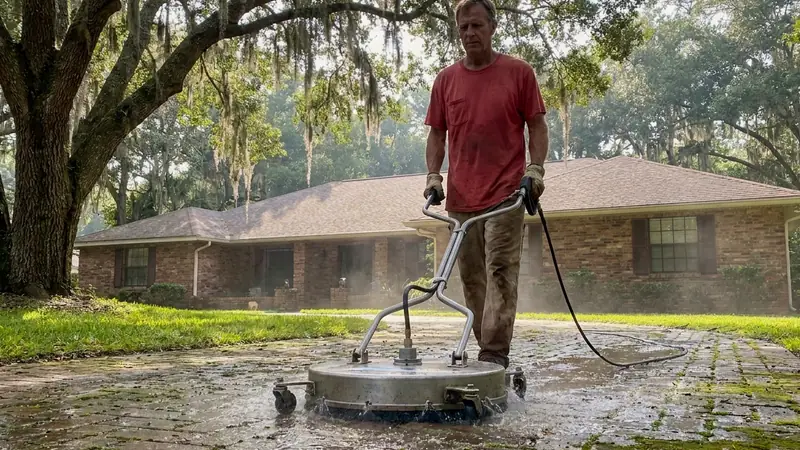
Brick and older mortar do not like harsh pressure. A surface cleaner with controlled pressure lifts dirt, algae and green film without stripping the face of the paver. On soft old brick, gentle cleaning protects the surface that the sealer will cover. Harsh pressure can pit the face and loosen mortar between pavers. Washing removes joint sand, so it is replaced after.
Repair and re-sand
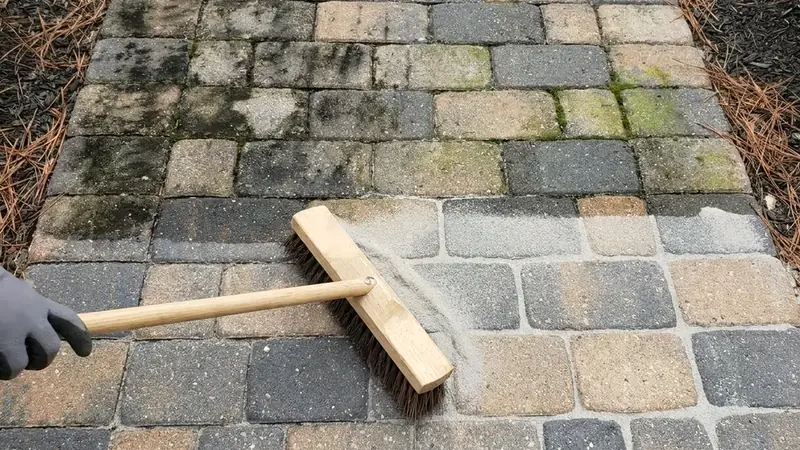
Roots can lift a walk, and a dip where cars park is common. Those sections are reset first, because sealing preserves whatever is there. New sand is worked into every joint before the final sweep. Full joints keep the walk tight under foot traffic. Loose joints let pavers shift and open gaps where weeds root.
Dry fully
A brick maker warns against sealing over damp or dirty surfaces, since those get locked in. In shade, pavers may need a longer wait than a sunny drive. They are sealed only when fully dry, typically 24 to 48 hours after cleaning. A shaded courtyard can take longer, and the contractor checks before spraying. A simple water test shows whether the surface has dried.
Seal with the right product
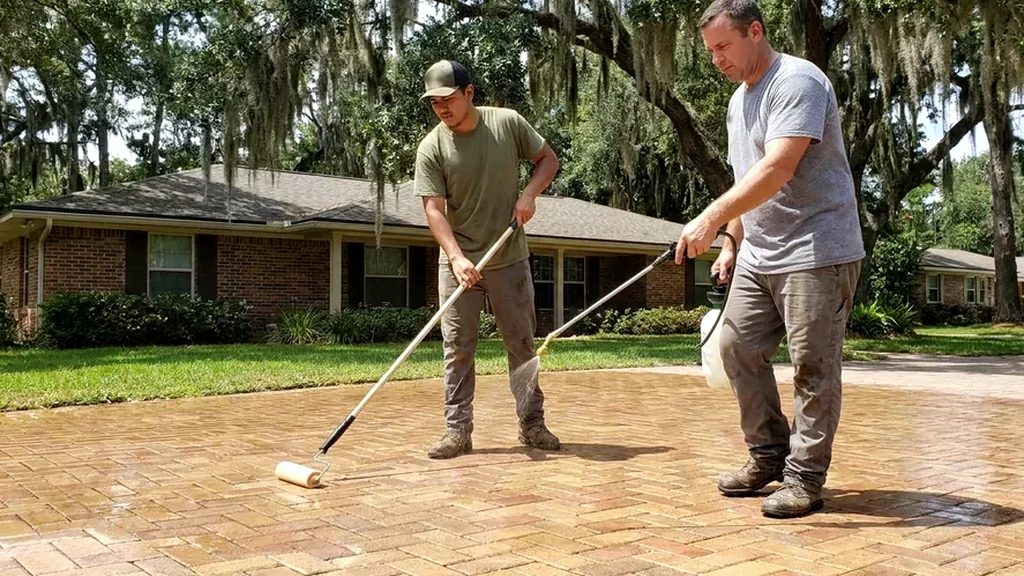
Concrete pavers can take a film-forming acrylic, and old clay brick gets a breathable penetrating product. The sealer goes on by spray and is then back-rolled to level the coat. Pool filters and drains are covered during the work, and cars stay off about a day.
Complete paver services in San Marco
A San Marco job begins with a close look, because old brick, new concrete and stone each need a different plan. After that come washing, repair, re-sanding, drying and sealing. One Jacksonville company spends two to three hours on prep for every hour of sealing. For a plan that fits your lot, ask for a free estimate.
Film-forming acrylics sit on the surface and steady joint sand, while silane or siloxane products soak in and leave the look unchanged, says a trade supplier. Concrete pavers can take either kind. Old clay brick usually does better with the penetrating kind. Ask the contractor which fits yours when you call (904) 872-8339.
Matte, satin and wet look are the usual finishes. Water-based sealer cannot go over solvent-based, and companies commonly quote two to five years between coats. A wet look shows scuffs sooner, which matters where cars turn on a driveway. To talk through finishes, ask for a free estimate.
Jacksonville gets about 52 inches of rain a year, mostly from May to September, and November through April is driest. Sealing in the drier months means fewer storm delays. Pool decks see chlorinated splash that dries white, says PaverGuard, so they may need a sooner reseal. Call (904) 872-8339 to ask about the calendar.
Questions to ask before you hire
- Is there a sealer for pool decks that stays grippy when wet?
- Do you re-sand the joints once the pavers are dry?
- Who do I call if I see a problem after the job is done?
- About how many hours will the job take for a driveway my size?
- Will you fix loose or lifted pavers before sealing?
- How do you handle the afternoon rain we get in summer, and how do you reschedule?
- What do you do about the white haze that comes up on some pavers?
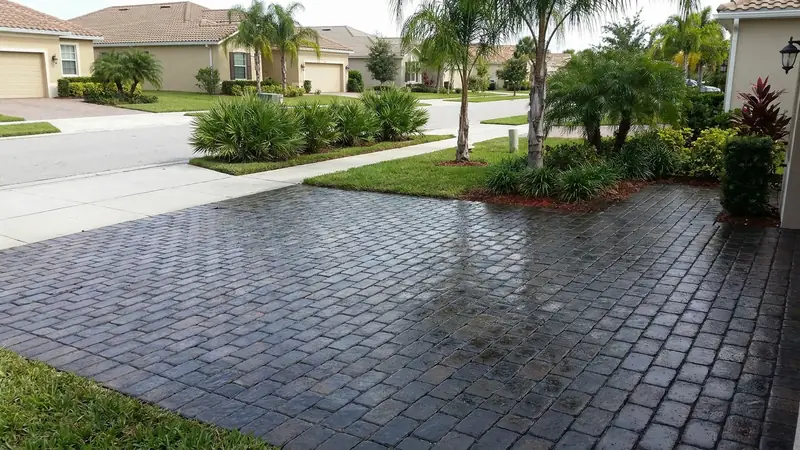
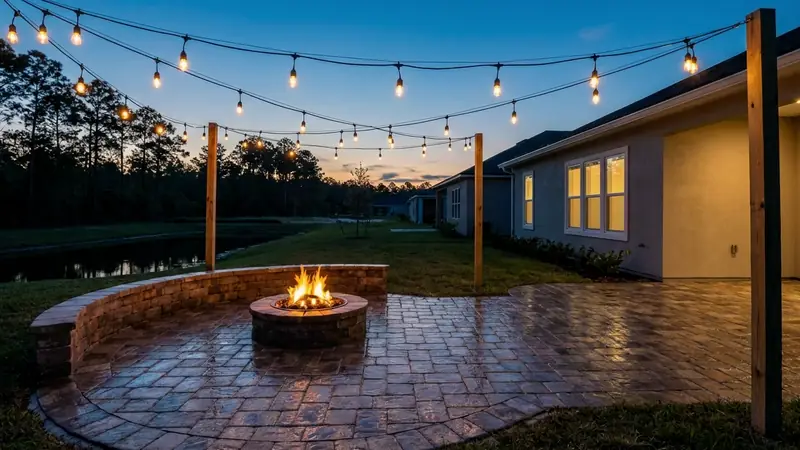
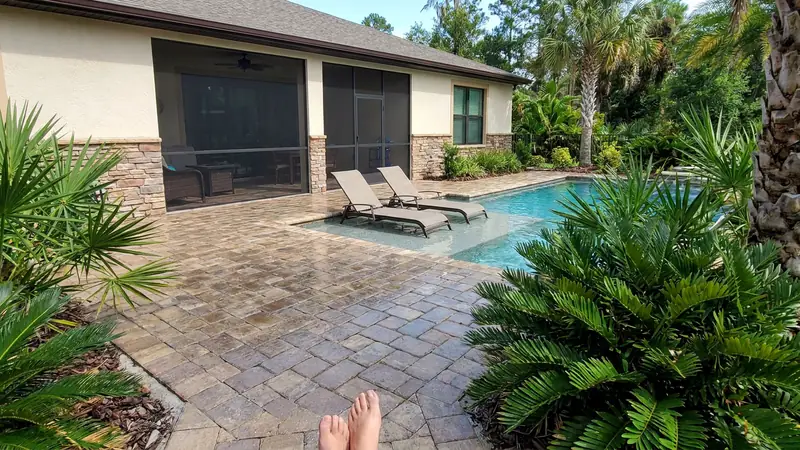
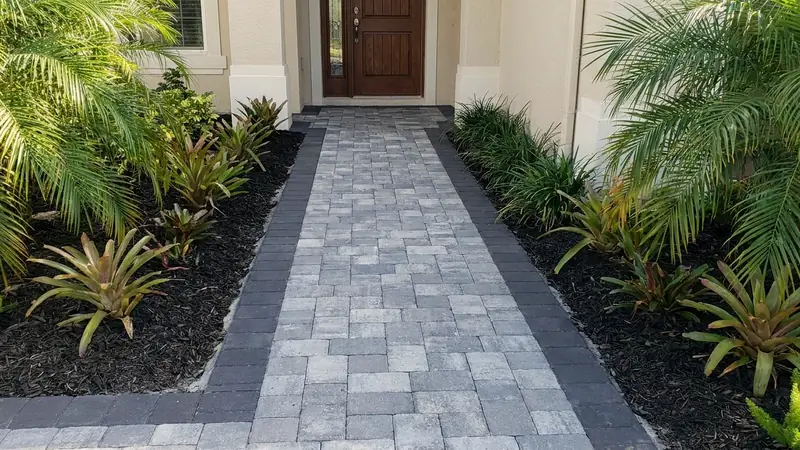
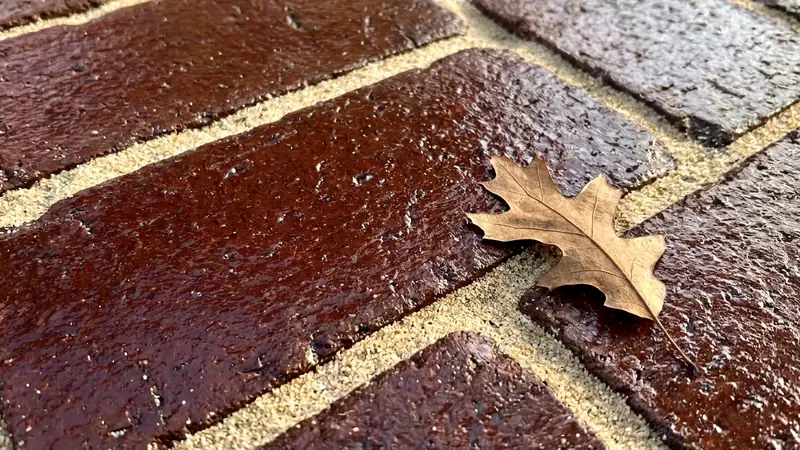
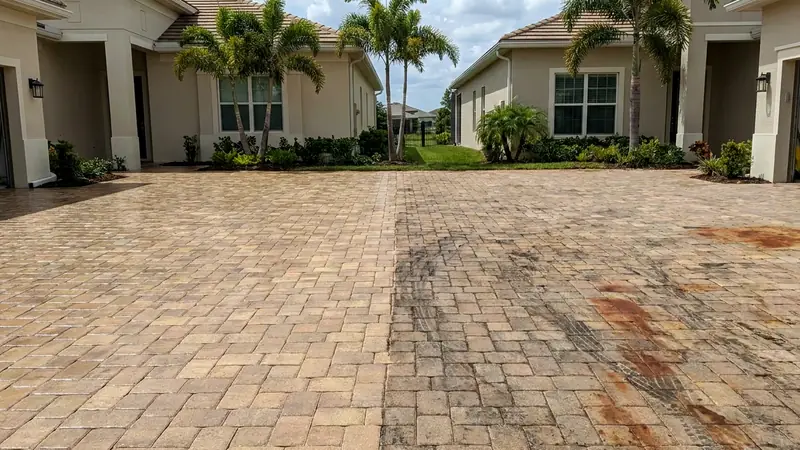
What do sealed pavers look like around San Marco?
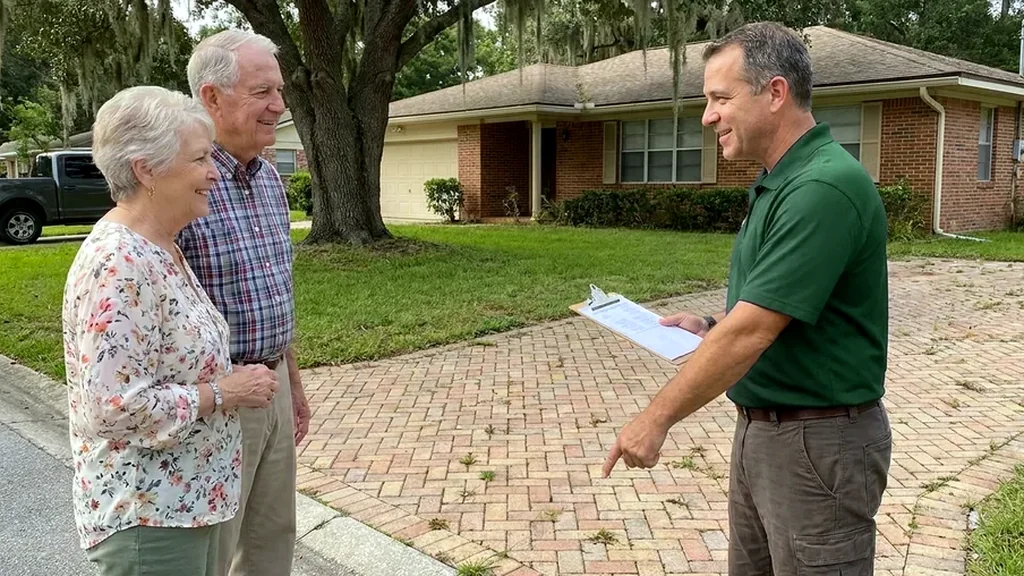
Why local matters in San Marco
San Marco has its own preservation society, formed in 1975 to preserve and renew the area. A contractor who respects that history asks about review rules before touching a front walk. That avoids a mid-job surprise. ask for a free estimate and share your address.
San Marco lies across the St. Johns River from downtown, and the Acosta Bridge, which opened in 1921, links the two. A contractor who works both sides plans the day around bridge traffic. That keeps arrival times honest. Call (904) 872-8339 to set a time.
Older properties often change hands, and each owner may have sealed the pavers differently. A local contractor asks questions and checks the surface instead of guessing. One company says pavers sealed before with an oil-based product must be stripped first. ask for a free estimate and bring any notes you have on the last coat.
How did San Marco get its look?
San Marco was once the independent city of South Jacksonville, annexed in 1932, and its Mediterranean look came from a 1925 development by Telfair Stockton. Lots sold out within three hours, according to Wikipedia. The triangular San Marco Square, named for Venice's Piazza San Marco, sits where Atlantic Boulevard, Hendricks Avenue and San Marco Boulevard meet. Call (904) 872-8339 for a free look.
Marco Lake began as a claypit for the Gamble and Stockton Brick Company. Fletcher Park started as a World War I housing project for shipyard workers, completed in April 1919 with 158 houses. Theatre Jacksonville's building on San Marco Boulevard joined the National Register of Historic Places in 1991. ask for a free estimate to schedule a free estimate.
Frequently Asked Questions
Does sealing help pavers hold up in Florida?
Yes, since Jacksonville sun, rain and humidity wear bare pavers down. Sealing keeps oil, grease and dirt sitting on top instead of soaking in, and it protects the color. With care, a sealant should last 3 to 5 years. It is not required, but it keeps San Marco pavers looking kept. Mildew and green film grow more slowly on a sealed surface, which saves effort between visits. Many owners book a coat before a sale or a party, when the front walk matters most. Curb appeal counts most when guests arrive on foot.
Can a contractor clean, sand and seal San Marco pavers in one job?
Yes, those steps are done in order, usually over one to two days. Washing removes joint sand, so fresh sand goes in before sealer. The surface must be fully dry before the coat. The contractor will tell you which days to stay off. Pets and children should stay off too, until the coat has cured. A cone or a note at the walk's start works well.
What is the average cost to seal pavers in San Marco?
Northeast Florida firms commonly price a clean, sand and seal at $1.75 to $3.25 per square foot. Brick and natural stone can need different sealer chemistry, and failed old sealer adds work. Strip and reseal costs more than a standard wash and seal. Ask the contractor to confirm whether yours is needed. A free estimate gives you the real figure for your lot.
Is it better to spray or roll paver sealer?
Often both. A low-pressure sprayer applies the sealer at a controlled rate, and a roller then evens it out. A technical bulletin from a sealer maker says excess sealer left to dry can cause mottling or cloudiness. The contractor will name the method on your quote. Ask how many coats are planned, since brick may take more than concrete. A paver company serving the area applies two coats as standard and a third on never-sealed brick pavers.
Does San Marco's historic district affect paver work?
It can. The City of Jacksonville says properties in a local historic district or designated landmarks need a Certificate of Appropriateness for exterior work, with driveways listed as an example. Check your address on the city's Land Development Map, then mention it when you call. The contractor can then plan a finish that fits the rules. Keep any letter from the city or the association handy.
Can old clay brick pavers in San Marco be sealed?
Yes, with the right product. Brick of that age takes a breathable penetrating product, according to a Northeast Florida company, because a surface film can hold moisture and cloud or flake. The contractor should test a small spot first. Wait for the spot to dry before the full job is approved. Judge it in daylight, from the sidewalk and from the door.
How long should I stay off a sealed walkway in San Marco?
Walking is usually fine within a few hours, and driving waits about a day. One Jacksonville company needs two to four hours for feet and 24 hours for vehicles. Wait longer if rain is in the forecast. Sealer needs a dry surface and about 24 hours of dry weather to cure. A forecast check the day before is routine.
Why do my San Marco pavers turn green in the shade?
Wet conditions suit algae, and shaded spots with little air movement can grow it faster. Pavers under oaks and magnolias stay damp longer. That is why shaded walks green up first. Trimming low branches can help sunlight reach the stones. The contractor washes the green film off, lets the surface dry and seals so the next cleaning is easier.
Nearby areas we serve
Ready for a Free Estimate in San Marco?
Call (904) 872-8339 and tell us about your pavers.
Free, no obligation